← Back to Places
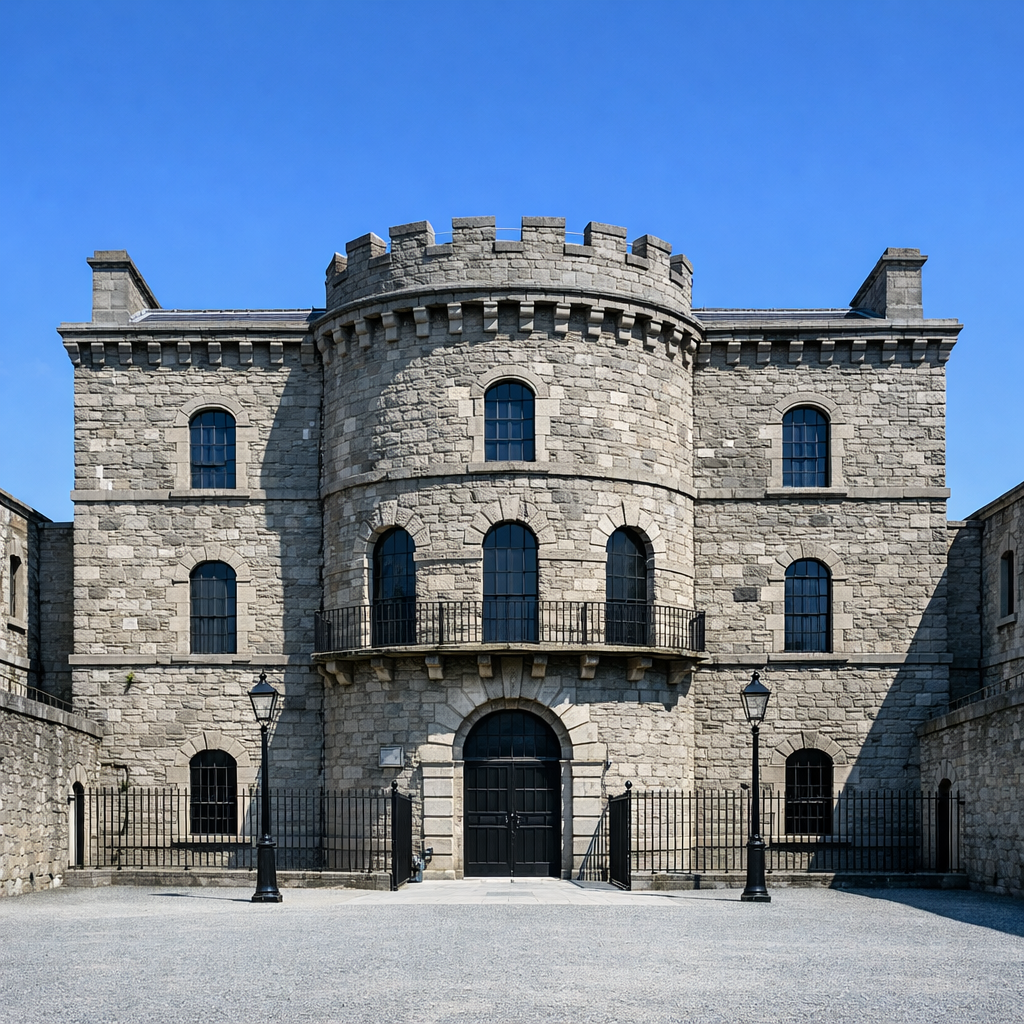
Bully's Acre (Irish: Tamhlacht Muintir Bhuilín) is one of the oldest burial grounds in Dublin, with a history spanning well over a thousand years. Located adjacent to the Royal Hospital Kilmainham, this ancient cemetery is believed to have been in use since the early Christian period, possibly from the 7th century.
The cemetery takes its name from the Bully family, who were prominent landowners in the area during medieval times. Over the centuries, it served as the final resting place for thousands of Dublin's citizens, from wealthy merchants to the city's poorest inhabitants.
The origins of Bully's Acre are intertwined with the early Christian church founded by Saint Maighneann, from which Kilmainham takes its name. The cemetery grew around this ancient church site, becoming one of Dublin's principal burial grounds throughout the medieval period.
During the time of the Knights Hospitaller, who established their Irish headquarters at Kilmainham in 1174, the cemetery continued to serve the local community. The Knights' own chapel and burial ground were separate, but Bully's Acre remained the main cemetery for ordinary people.
Unlike many medieval cemeteries associated with parish churches, Bully's Acre was known for accepting burials regardless of social status, religion, or circumstances of death. This made it particularly important during times of plague, famine, and epidemic, when parish cemeteries might refuse burials.
The cemetery became especially significant during the Great Famine of 1845-1852, when it received the bodies of countless famine victims who died in Dublin or in the nearby South Dublin Union workhouse. Mass graves from this period are a sobering reminder of this tragic chapter in Irish history.
Despite its reputation as a burial ground for the poor, Bully's Acre also contains the graves of notable figures. These include several members of the United Irishmen executed after the 1798 Rebellion and various historical figures whose graves are marked with weathered headstones.
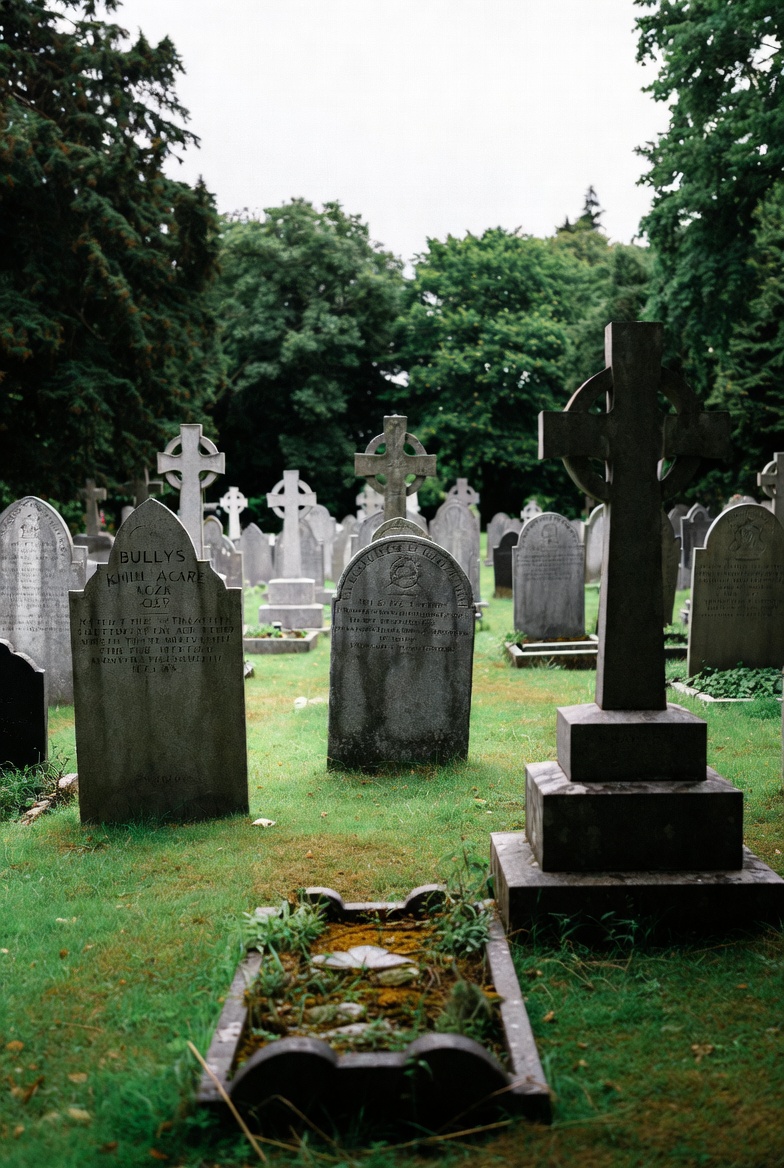
Many of the older headstones have been lost to time, vandalism, or deliberate clearing, but those that remain offer fascinating glimpses into Dublin's past, with inscriptions dating back several centuries.
Today, Bully's Acre is accessible through the grounds of the Royal Hospital Kilmainham/IMMA. The cemetery is no longer in active use and stands as a historic monument. Visitors will find ancient headstones, some Celtic crosses, and a contemplative atmosphere that invites reflection on the countless lives commemorated here.
The site offers a unique opportunity to connect with Dublin's deep history, from the early Christian period through medieval times to the tragedy of the Great Famine. It's a place of quiet dignity that rewards thoughtful exploration.